Welcome back my Caffeinated Creatives!
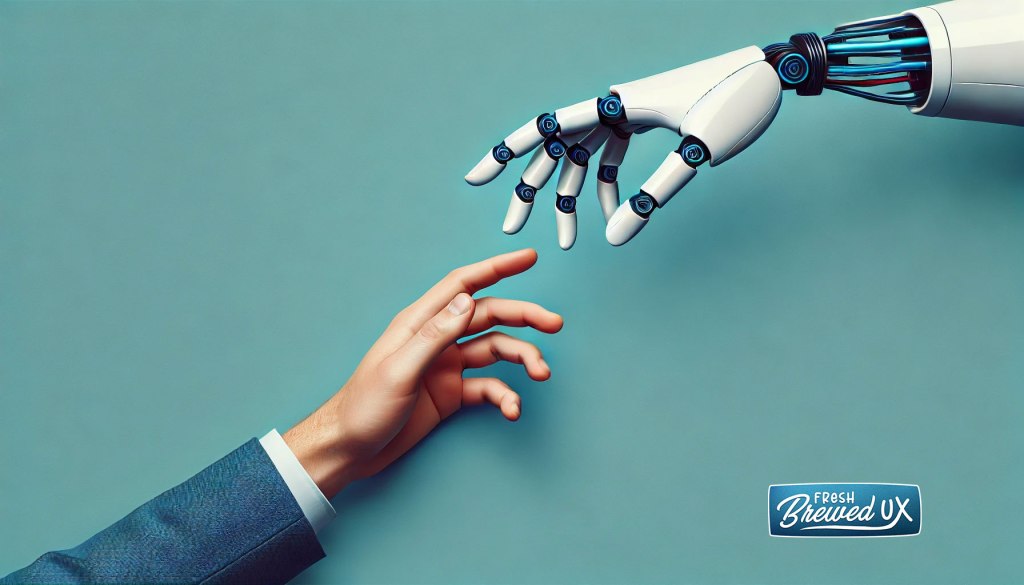
There’s been a lot of chatter lately about AI…and no, it’s not some scary robot takeover of our creative souls. Instead, we’re here to celebrate how artificial intelligence can enhance our human creativity, not replace it. Think of AI as your trusty sidekick that handles the nitty-gritty tasks, so you can focus on the magic only human ingenuity can create. Whether you’re sketching out ideas over your third espresso or fine-tuning a pixel-perfect layout, AI is here to make your design journey smoother and more efficient.
Today, we’re exploring how AI is maximizing opportunities for website design. We’re going to walk through the entire process—from the early days of ideation and competitor research to the final launch and beyond—showing you how to integrate AI tools at every step. But let’s not forget, it’s all about boosting your creative power while preserving that unmistakable human touch that makes your work stand out.
In this post, we’ll break down the website design process into several key phases: laying the groundwork, entering the creative workshop, bringing your design to life, and finally, launching and maintaining your masterpiece. Each phase is supercharged with AI tools that help you brainstorm, analyze, design, code, and even test your work, all while keeping the process fun, engaging, and yes—full of personality.
What’s great about this approach is that you’re not outsourcing your creativity; you’re simply giving yourself more time and space to focus on the parts that only you can do—crafting a unique user experience, adding personality, and connecting with your audience. AI handles the repetitive tasks and data crunching so that your creative vision can shine through every pixel and line of code.
So, refill your coffee, settle into your coziest workspace, and let’s dive into how AI is transforming the website design process without ever taking away the human element from brainstorming, sitemapping, wireframing, prototyping, development, QA, launch, and beyond.
The Human Touch in an AI-Enhanced World
Before we jump into the details, it’s important to remember that AI is here to boost our creativity, not replace it. Think of it like using a power tool in your workshop: it speeds up the process, makes things more precise, but it’s still your unique craftsmanship that brings the project to life. AI tools such as ChatGPT can help generate ideas and overcome creative blocks, but they’re only as good as the human vision guiding them.
In our world of UX and creative marketing, human emotion and intuition remain irreplaceable. When you’re brainstorming ideas for a website design, AI can offer a smorgasbord of suggestions. For example, you might ask, “What innovative features can a UX website for creative professionals include?” and receive a variety of prompts that spark your next breakthrough idea. It’s the perfect blend of data-driven insight and artistic intuition.
Moreover, when you’re making critical design decisions, nothing beats a gut feeling honed by experience. AI tools help gather data and analyze trends, but it’s your ability to empathize with users that shapes the final product. This partnership ensures that while AI handles the repetitive tasks, you maintain control over the creative vision, adding that personal, human flair that sets your work apart.
One of the best parts of this approach is that it makes the entire process more enjoyable. It’s about allowing you to focus on brainstorming, sketching, and perfecting your design. That extra time allows you to infuse humor, personality, and a touch of relatability into every aspect of your project.
This collaboration between human creativity and AI efficiency creates a harmonious workflow. You get the best of both worlds: the speed and knowledge of AI, combined with the depth, nuance, and empathy that only a human designer can provide. It’s a reminder that while technology evolves, the heart of design remains deeply human.
Ultimately, using AI in website design is about empowerment. It’s about enhancing your capabilities so that every project reflects your unique creative vision while benefiting from cutting-edge technology. So, embrace these tools as allies in your creative journey and remember: your human touch is what truly makes a design unforgettable.
Laying the Groundwork: Research, Ideation, and Strategy
The early stages of website design are crucial—they set the foundation for everything that follows. This phase includes ideation, market & competitor analysis, user research, and strategy & branding. Here’s where AI can really help by crunching numbers, offering insights, and generating creative ideas that inform your project.
At the ideation stage, you might find yourself juggling dozens of ideas while trying to figure out which ones are worth pursuing. ChatGPT is a fantastic tool for this. By prompting it by writing, “Suggest innovative website features for a creative agency,” you get a diverse range of ideas that spark further creativity.
Once you’ve got a pile of ideas, it’s time for market and competitor analysis. Tools like MarketMuse and SEMrush help you dive deep into industry trends and competitor strategies. You can input prompts such as, “Identify top-performing UX design keywords,” to gather data that shapes your approach. These insights enable you to pinpoint what works and what gaps you can fill with your own unique design. This is a data-driven step where informed decision-making meets creative planning.
User research is another critical component. Platforms like UserTesting or Survicate let you collect valuable feedback from real users. You can set up surveys asking, “What are the key features you look for in a modern UX portfolio website?” and use the responses to tailor your design. This phase ensures that your design decisions are grounded in user-centric insights—a vital ingredient for any successful website.
With the data in hand, you move on to strategy and branding. AI tools like Looka help generate logo ideas and brand guidelines based on your inputs. By asking, “Generate a minimalist logo for a design consultancy that emphasizes innovation and user focus,” you receive suggestions that can serve as a springboard for your brand identity. This step is all about establishing the visual and strategic framework for your project, ensuring that every subsequent design decision is aligned with your brand’s core values.
Finally, synthesizing all this research into a cohesive strategy is where the magic happens. You’re combining quantitative data from competitor analysis with qualitative insights from user research and your own creative brainstorming. This blended approach ensures that your foundation is solid and that your design process moves forward with purpose and clarity.
In essence, the groundwork phase powered by AI transforms a traditionally time-consuming process into an agile, data-informed journey. It’s about setting the stage for a website that is both innovative and deeply user-focused, allowing you to lay a robust foundation on which to build your creative masterpiece.
The Creative Workshop: Sitemapping, Wireframing, and Prototyping
With your strategy in place, it’s time to jump into the creative workshop. This phase is where you move from abstract ideas to tangible blueprints—covering sitemapping, wireframing, prototyping, and visual design. AI tools make these steps quicker and more intuitive, letting you experiment and iterate without getting bogged down by routine tasks.
Start with sitemapping. Using AI-enhanced tools like Whimsical or Miro, you can generate a visual sitemap that outlines the structure of your website. For instance, a prompt like “Generate a sitemap for a UX portfolio website” can quickly produce a layout that includes all key sections: Home, About, Portfolio, Blog, and Contact. This digital roadmap is essential for ensuring your website has a logical and user-friendly navigation flow.
Next up is wireframing. Tools such as Uizard or Figma’s AI plugins let you create basic wireframes in record time. Instead of spending hours drawing layouts from scratch, you can use prompts like, “Create a responsive wireframe for an online creative portfolio,” and get instant results that you can refine. These wireframes serve as the skeleton of your website, focusing on structure and functionality rather than the finer design details.
Prototyping takes things a step further by turning wireframes into interactive models. With Framer AI, you can develop clickable prototypes that simulate user interactions. A sample prompt might be, “Build an interactive prototype for a landing page focused on sign-ups,” which lets you test user flows and get immediate feedback. This rapid prototyping is crucial for identifying potential issues and fine-tuning the user experience before moving into full-scale development.
Visual design is where your brand’s personality truly comes to life. AI-powered tools like Midjourney and DALL-E can generate custom graphics, icons, and illustrations based on your brief. For example, you might ask, “Generate modern, minimalist icons for a UX website,” and receive a variety of options that fit your aesthetic. This phase is all about creating eye-catching visuals that reinforce your brand identity and enhance usability.
In short, the creative workshop phase powered by AI transforms the design process into an interactive, fast-paced exploration. It’s a time to experiment, test ideas, and gradually refine your vision into a cohesive blueprint that’s ready for the next phase of development.
Bringing It to Life: Development, QA, and Launch
Now that you’ve crafted a brilliant blueprint, it’s time to turn your design into a live, working website. This phase encompasses development, quality assurance (QA), testing, and the eventual launch. Even here, AI steps in to speed up the process and ensure a seamless transition from design to production.
During development, AI-powered tools like GitHub Copilot become your coding partner. They assist by generating code snippets and suggesting improvements, so you can focus more on creative problem-solving. For example, if you need a responsive navigation bar in React, you might prompt Copilot with, “Generate a React component for a mobile-friendly nav bar.” Within seconds, you receive clean, functional code that you can customize further. This not only increases your development speed but also reduces the likelihood of errors, giving you more time to focus on innovative features.
Quality assurance and testing are equally important. AI-driven platforms such as Testim and Applitools automate testing procedures, simulating various user scenarios and catching bugs before they become major issues. Instead of manually testing every aspect of your site (a task that can be as draining as a Monday morning without coffee), you can set up automated tests. For instance, a command like “Run usability tests for our signup flow” can quickly pinpoint issues, ensuring your site is both functional and user-friendly.
Then comes launch day—a moment that’s both exhilarating and nerve-wracking. Even at this stage, AI tools like Google Analytics (with AI-powered insights) monitor your website in real time. These tools provide instant feedback on user engagement, page performance, and potential issues, allowing you to fine-tune your website immediately after it goes live. This data-driven approach ensures that your site isn’t just beautiful but also highly performant.
The transition from development to launch is smooth when you have AI handling the heavy lifting. It’s like having a digital co-pilot who keeps everything running perfectly as you prepare to share your work with the world. By automating repetitive tasks and offering real-time insights, AI empowers you to focus on delivering a stellar user experience that meets and exceeds expectations.
In essence, the development and launch phase is where your creative vision finally takes shape in the digital realm. AI tools work tirelessly behind the scenes to ensure that the transition from a well-crafted design to a live, interactive website is as seamless as possible, letting your innovation shine without a hitch.
The Final Stretch: Post-Launch Optimization and Ongoing Maintenance
Even after your website goes live, the journey isn’t over. Post-launch optimization and ongoing maintenance are crucial for keeping your site running smoothly and evolving with user needs. AI continues to play a pivotal role here, turning what used to be tedious tasks into efficient, data-driven processes.
Once your site is live, the first order of business is to gather user data and feedback. Tools like Optimizely and Hotjar let you conduct A/B testing and analyze user interactions. For instance, you might test two versions of your call-to-action to see which one converts better. A simple prompt like “Compare the conversion rates of two CTA designs” can provide actionable insights, enabling you to fine-tune your website for better performance. This data-driven approach helps you make informed decisions that lead to continuous improvement. You can also take data from Hotjar and plug it into ChatGPT and ask GPT to anayze the data for you. Its all about using all these tools together to maximize your opportunities for improved workflows.
Maintenance is another area where AI excels. Monitoring tools such as Pingdom and UptimeRobot work around the clock to track your website’s performance, alerting you to any issues like downtime or broken links before they affect your users. Imagine receiving a notification that your site’s load time has increased—thanks to these tools, you can address the problem immediately. This proactive maintenance ensures that your website remains secure, fast, and reliable.
Furthermore, post-launch optimization isn’t just about fixing problems—it’s about enhancing your website based on real user behavior. AI-powered analytics tools can suggest updates and improvements by analyzing engagement metrics and user trends. For example, you might prompt an AI tool with, “Analyze user behavior on our homepage and recommend design tweaks,” receiving suggestions that help you keep your content fresh and engaging. This iterative process ensures that your website evolves along with your audience’s preferences, remaining relevant and innovative over time.
The ongoing maintenance phase is also about planning for future updates. By regularly reviewing performance data and user feedback, you can develop a roadmap for future iterations. Whether it’s adding new features, refreshing outdated visuals, or simply tweaking the layout, continuous optimization ensures that your website never stagnates. AI tools make it easy to track these metrics, allowing you to be both proactive and reactive to changing trends.
Ultimately, the post-launch phase is an ongoing cycle of improvement, where AI empowers you to keep your website performing at its best. It’s the final, yet never-ending, piece of the puzzle that guarantees your digital presence remains as engaging and effective as the day it launched.
The Caffeine Kick: AI Stats that Fuel Marketing Magic
Before we wrap up, let’s take a moment to enjoy a caffeine kick—a quick rundown of some eye-opening statistics that show how AI is influencing the marketing world. These numbers aren’t just trivia; they’re proof that leveraging AI in our creative processes can lead to remarkable results.
According to a study by Epsilon, 80% of consumers are more likely to make a purchase when brands offer personalized experiences. This statistic underscores the importance of tailoring your website’s content and design to the specific needs and preferences of your audience. AI tools that analyze user behavior and preferences empower you to create a more targeted and engaging digital experience.
Another impressive stat comes from Salesforce’s State of Marketing report. It shows that 84% of marketing organizations are actively using AI in their marketing strategies. This widespread adoption is a clear indicator that AI isn’t just a passing trend—it’s a core component of modern marketing that drives engagement, efficiency, and revenue growth.
Furthermore, a report by Accenture indicates that companies leveraging AI can boost their marketing productivity by up to 40%. This boost is largely due to AI’s ability to handle repetitive tasks, analyze large datasets, and provide insights that would otherwise take ages to compile manually. In our fast-paced digital world, that kind of efficiency can be a real game-changer for creative teams and hiring managers alike.
Additionally, research from Insivia suggests that over 70% of consumers are more likely to remember and share content from brands that make them laugh. This stat is a sweet reminder that humor and engagement go hand in hand—an approach that’s especially effective when combined with AI-driven personalization and data analytics.
These statistics are not just numbers; they’re a wake-up call to all of us in the creative industry. They prove that when we integrate AI into our workflow, we’re not only optimizing our processes but also creating experiences that resonate deeply with our audiences. It’s a validation of our efforts to blend human creativity with machine efficiency, ultimately leading to more effective and memorable digital experiences.
So, as you sip your next cup of coffee and plan your next project, let these stats serve as your motivation. They’re a reminder that AI is a powerful tool—one that, when used wisely, can elevate every aspect of website design and digital marketing. Embrace these insights, experiment with the tools, and let them fuel your next big creative breakthrough.
Conclusion: Enhancing Human Creativity with AI in Website Design
As we draw this exploration to a close, one thing stands out clearly: AI is here to enhance our creativity, not replace it. From the initial spark of ideation to post-launch optimization and ongoing maintenance, AI tools have transformed the website design process into an agile, efficient, and deeply creative journey.
We’ve seen how the early stages—research, ideation, and strategy—can be supercharged with AI, providing invaluable insights that shape our creative direction. The creative workshop phase, with sitemapping, wireframing, and prototyping, is where abstract ideas turn into tangible designs, all thanks to the efficiency of AI tools. Then, as we bring our designs to life during development and QA, AI handles the repetitive tasks, allowing us to focus on refining the user experience. And even after the launch, continuous optimization and maintenance keep our digital creations performing at their best.
The human element remains at the core of every successful project. AI is the trusty sidekick that helps us work smarter, faster, and more creatively—but it’s our unique insights, humor, and emotional connection that make our work truly resonate. This partnership between technology and human creativity is what sets modern website design apart in today’s competitive landscape.
Until next time, keep those creative juices flowing, your designs sharp, and your coffee cup overflowing with inspiration. Cheers to a future where AI and human creativity work side by side to build digital experiences that are as engaging, innovative, and delightfully human as ever!
How are you using AI in your marketing? Lets chat in the comment section, AI is here to stay and I truly believe that if we aren’t taking advantage of learning how to use and optimize it now, we are missing out on providing our best work.


 freshbrewedux.com
Leave a comment